


Battery energy storage system (BESS) Schoenaker will have a capacity of 5 MW and a storage capacity of 10 MWh. This is a significant step towards making the municipality of Beuningen more sustainable.
The EOS will be installed at the Schoenaker Solar Park. The solar park has already been completed, but the associated EOS requires a separate planning permission process. The application for this permission will be submitted in 2025, meaning that the Schoenaker EOS cannot be completed until 2026 at the earliest.
What will the Schoenaker EOS look like?
The EOS will consist of two battery containers and a transformer. The battery containers are similar in size to a shipping container. The system will be installed within the solar park’s existing fencing, directly behind the feed-in station – the large green building at the entrance to the site (see the overview map below).
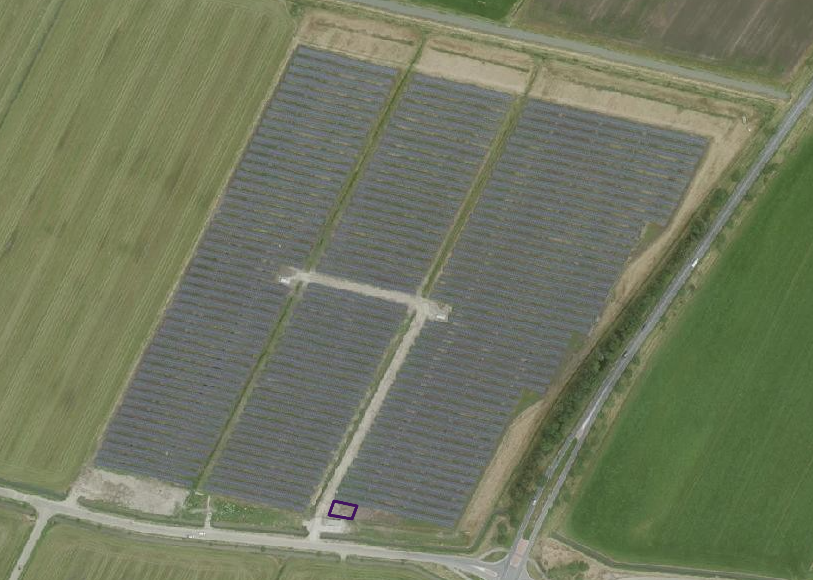
To illustrate this, this file contains visualisations of the planned EOS at the Schoenaker Solar Park site. These were created by ROM3D and show the system with vegetation that is three and five years old, providing a realistic picture of how the system will blend into the landscape.
What does an energy storage facility do?
The large-scale storage of (renewable) energy is becoming increasingly important. This is because the electricity grid has limited capacity, making it increasingly difficult to use and/or generate electricity at any location and at any time of day. Energy storage systems (also known as EOS) are used to free up capacity on the electricity grid. Energy storage helps to reduce and, to some extent, prevent grid congestion. Energy storage systems therefore contribute to climate targets, but they also provide energy security and stability, and help to reduce energy prices.